Leading AI, Not Chasing It: What HR teams need to know.
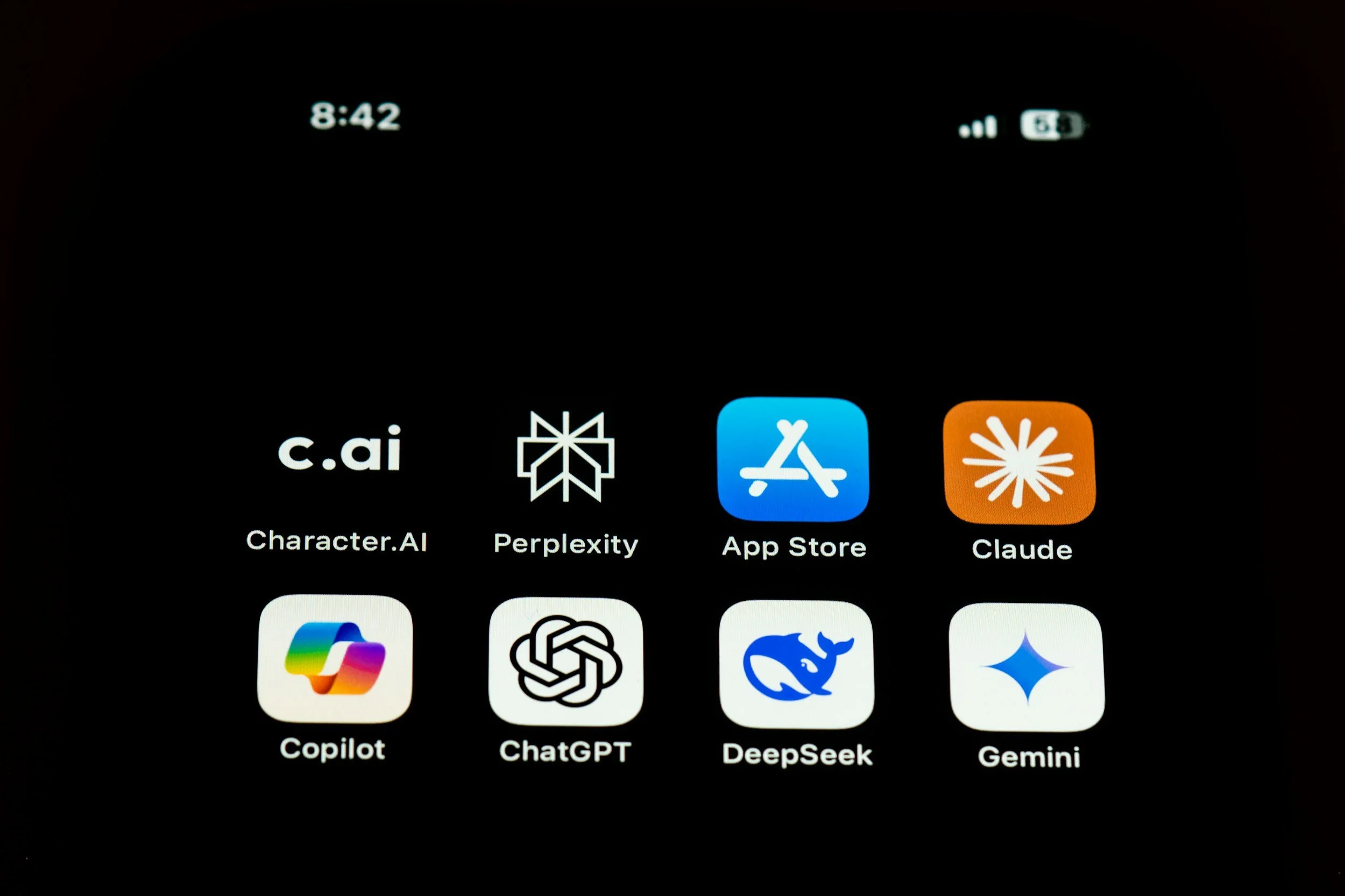
AI is no longer a future-state conversation in organizations—it’s here, it’s visible, and in many cases, it’s already being used (whether leaders realize it or not).
In HR and Learning & Development especially, there’s a growing expectation that AI should be leveraged to drive efficiency, insight, and scale. The challenge? Many internal teams are being asked to adopt AI without a clear strategy for how, why, or by whom.
What we’re seeing across organizations is not a lack of interest in AI—it’s a lack of alignment.
The problem at hand.
AI adoption is often treated as a technical initiative rather than an organizational one—creating problematic silos. Tools get rolled out by IT or individual departments experiment on their own, while HR and People teams are left reacting after the fact—figuring out policies, risks, learning gaps, and behavior change once usage is already underway.
When AI is approached this way, organizations tend to see:
Inconsistent use (and misuse) of tools
Heightened compliance and data privacy concerns
Anxiety or resistance from employees
Missed opportunities to truly enhance work and learning
To be effective, AI adoption must be cross-functional by design, not retrofitted later.
AI works best when leadership is aligned.
For AI initiatives to stick, senior leaders across domains need shared ownership. This includes, but is not limited to:
Chief People Officers (CPOs)
Chief Technology Officers (CTOs)
Chief Information Security Officers (CISOs)
Learning, Talent, and Operations leaders
Each brings a critical lens—people, technology, risk, capability-building, and business impact. When these leaders are aligned early, organizations are far better positioned to answer the real questions AI introduces:
What problems are we actually trying to solve?
Where does AI meaningfully support (not replace) human judgment?
How do we protect employees, data, and trust while still encouraging innovation?
AI is not just a systems decision—it’s a leadership one.
The Rise of the AI-Ready Leader.
One of the biggest gaps I see is not technical skill—it’s leadership readiness.
AI-ready leaders are needed across the organization, not just in tech-forward roles. These leaders don’t need to be AI experts, but they do need competencies in areas such as:
Critical thinking & decision-making: Knowing when to rely on AI outputs and when to challenge them (this is a MUST-HAVE)
Ethical and responsible use: Understanding bias, data limitations, and downstream impact
Change leadership: Supporting teams through uncertainty, experimentation, and evolving norms
Learning agility: Modeling curiosity and continuous skill-building
Communication: Translating complex tools into clear expectations and guardrails
Without these capabilities, AI becomes either underutilized—or overused without intention.
What does this mean for HR teams?
HR and L&D are uniquely positioned to shape how AI is adopted, learned, and sustained over time. This work goes far beyond tool training.
Effective AI enablement includes:
Defining clear principles and expectations for use
Partnering cross-functionally on governance and risk
Building learning experiences that are practical, role-based, and evolving
Equipping managers to coach teams on how to work with AI—not just whether they can
Creating feedback loops to monitor usage, effectiveness, and impact over time
AI learning is not a one-and-done workshop. It’s an ongoing capability-building effort.
Moving from pressure to purpose.
The question organizations should be asking is not “Are we using AI?” but rather:
“Are we using AI intentionally, responsibly, and in a way that truly supports our people and our business?”
When AI adoption is cross-functional, leader-enabled, and grounded in real competencies, it becomes less about keeping up—and more about building organizations that are adaptable, thoughtful, and human-centered.